advertisement
 
 Print    Email     Bookmark     Share

LED vs. LCD TV: Which is better?

You're walking through your local electronics store looking for a new TV and you come across a thing called an "LED TV". Which then leads you to ask: "Is that the same technology they use for the giant screens at football games?" And the answer, quite simply, is no.

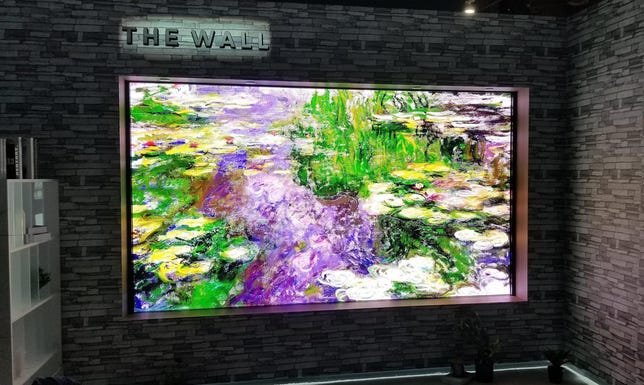
While the giant display in a sports stadium, for example, is made up of thousands of LEDs that are used to directly produce a picture, Samsung's "LED" TVs are actually LCDs. That's right, they're not LED TVs at all. Confused?

Samsung's televisions use a series of LEDs to light up the panel from the rear, and it's not the only company that does this. But what is backlighting anyway?

Why do LCD screens need a backlight?

As a consumer technology, LCD has been in widespread use since the early 1970s when it first appeared in digital watches. As its name suggests, Liquid Crystal Display is a liquid which has been sandwiched between two plates, and it changes when a current is applied to it.

While we've had black-and-white LCDs for years, color LCDs are a lot more recent, but the technology is the same. As we all know, you need to press a button to read a watch in the dark, and an LCD TV is no different. It needs a light behind it because it emits no light of its own.


A selection of LCD screens, including Samsung's 6 and 7 series, showing the differences between backlighting technologies. The panel on the right features a fluorescent tube backlight.
(Credit: CNET Asia)


What types of backlights are there?

At present there are two main methods of backlighting in LCD flat panels: Cold-Cathode Fluorescent Lamp (CCFL) and LED (light-emitting diode). There are several others, and these includes Sony's Hot Cathode Fluorescent Lamp (HCFL), though only one television currently uses this technology.

CCFL is the most widespread method of backlighting for LCD televisions, and consists of a series of tubes laid horizontally down the screen.


A cutaway of a CCFL-backlit LCD showing the different layers of polarizers and filters, and the thin fluorescent tubes themselves on the right.
(Credit: Ty Pendlebury/CNET Australia)


LED backlighting is still relatively rare, but has been in use in televisions since 2004 when it first appeared on a Sony WEGA television. Though there are several different ways of backlighting using LEDs (as we'll explain shortly), the idea is the same: A lot of LED bulbs are used to light the screen.


Tags: Light-emitting Diode, Samsung Electronics Co. Ltd., TV, Sony Corp., LCD


    Talkback
xenogen says...
Read your title. Did you answer the question?


skyflakes says...
does the author need to answer the question he poses? think about it yourself!


babyng says...
hmmn.. it should be titled: LED Explained


JahMekYah says...
Even if the author answers the title, its still his opinion and only end user who uses both can say which is. A title is a TITLE


To post comments, you need to become a member. It's FREE.
advertisement